2021-03-14

Cooling an Overheating NVMe SSD

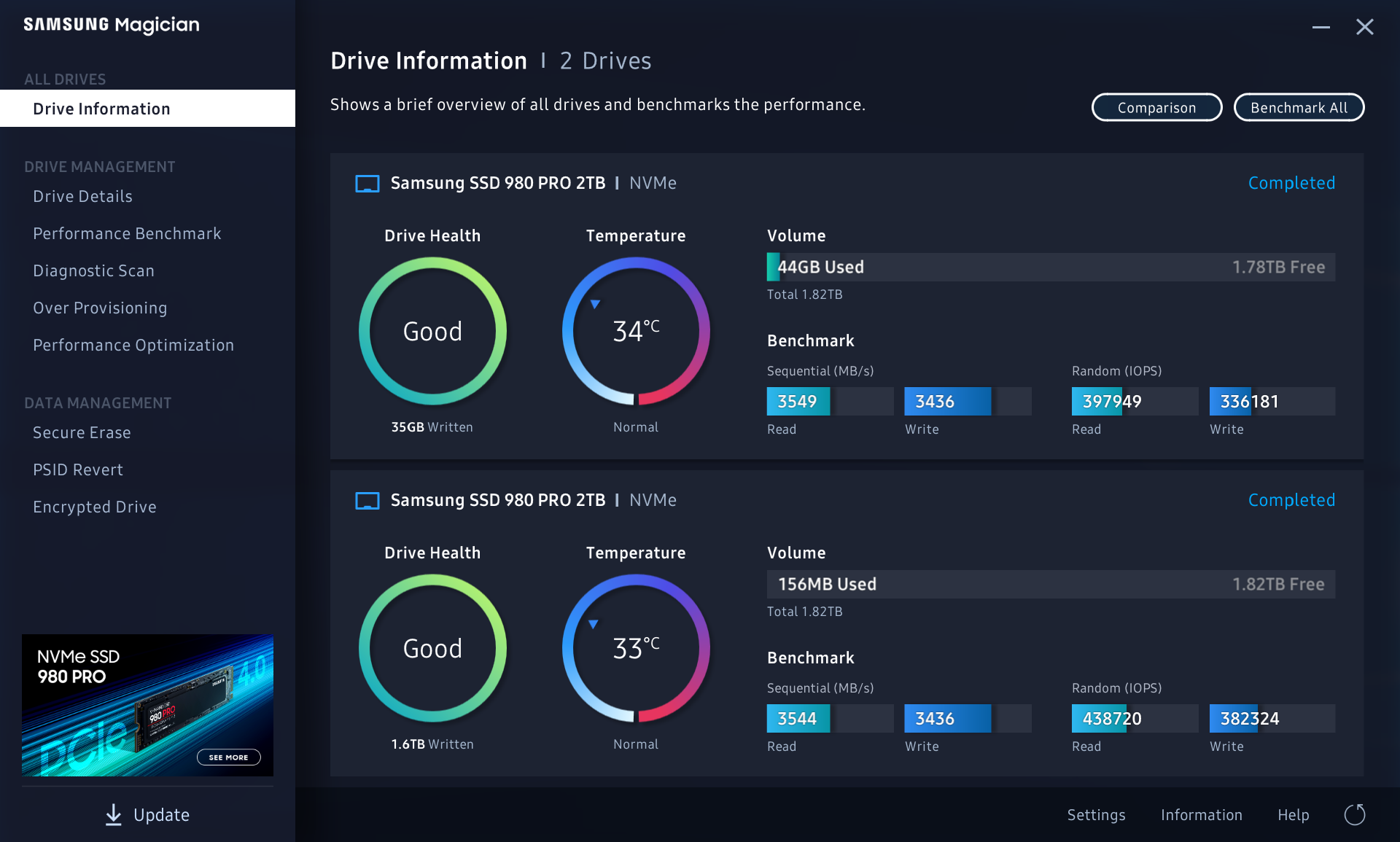
The SSD in my Windows 10 system started reporting failures, and as luck would have it, died while I was cloning it to a new drive. I suspect death was caused by overheating, and I addressed that with my new setup. This Windows 10 system is in an NCase M1 v5 SFF case with an ASUS ROG STRIX Z390-I GAMING mini-ITX motherboard and a Samsung 970 EVO NVMe M.2 SSD drive. The motherboard has two M.2 slots, one on the front of the motherboard and one on the back. The slot on the front has a heatsink, but I noticed the drive runs hot even under no load. Some googling showed this to be a common problem with the heatsink and M.2 slot being heated by the motherboard chipset, so I moved the SSD to the slot on the back of the motherboard. The SSD still reported +60°C temperatures under load, and I added a passive heatsink, and that kept temperatures in the low 50°C’s even under load. ...
March 15, 2021 · 5 min
After

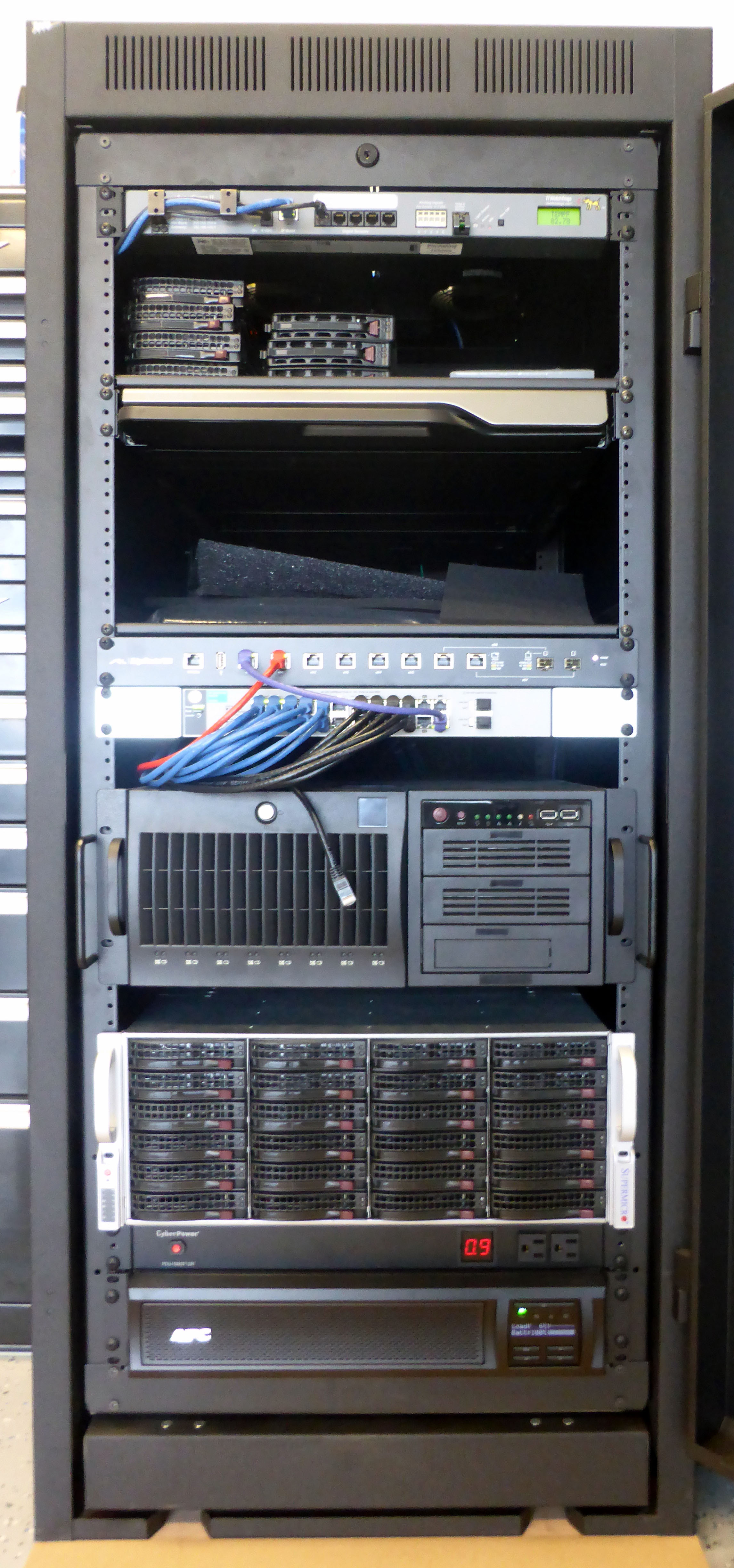
Rack that server

It’s been a year and a half since we moved into the new house, and I finally have the servers racked in the garage. Looks pretty nice compared to my old setups. My old setup was as follows: Two DELL OptiPlex 990 small form factor machines with Windows Server 2008 R2 as Hyper-V servers. One server ran the important 24/7 VM’s, the other was used for testing and test VM’s. The 24/7 VM’s included a W2K8R2 domain controller and a W2K12 file server. For storage I used a Synology DS2411+ NAS, with 12 x 3TB Hitachi Ultrastar drives, configured in RAID6, and served via iSCSI. The iSCSI drive was mounted in the Hyper-V host, and configured as a 30TB passthrough disk for the file server VM, that served files over SMB and NFS. These servers stood on a wooden storage rack in the garage, and at the new house they were temporarily housed under the desk in my office. ...

October 9, 2014 · 9 min