2021-03-14

Cooling an Overheating NVMe SSD

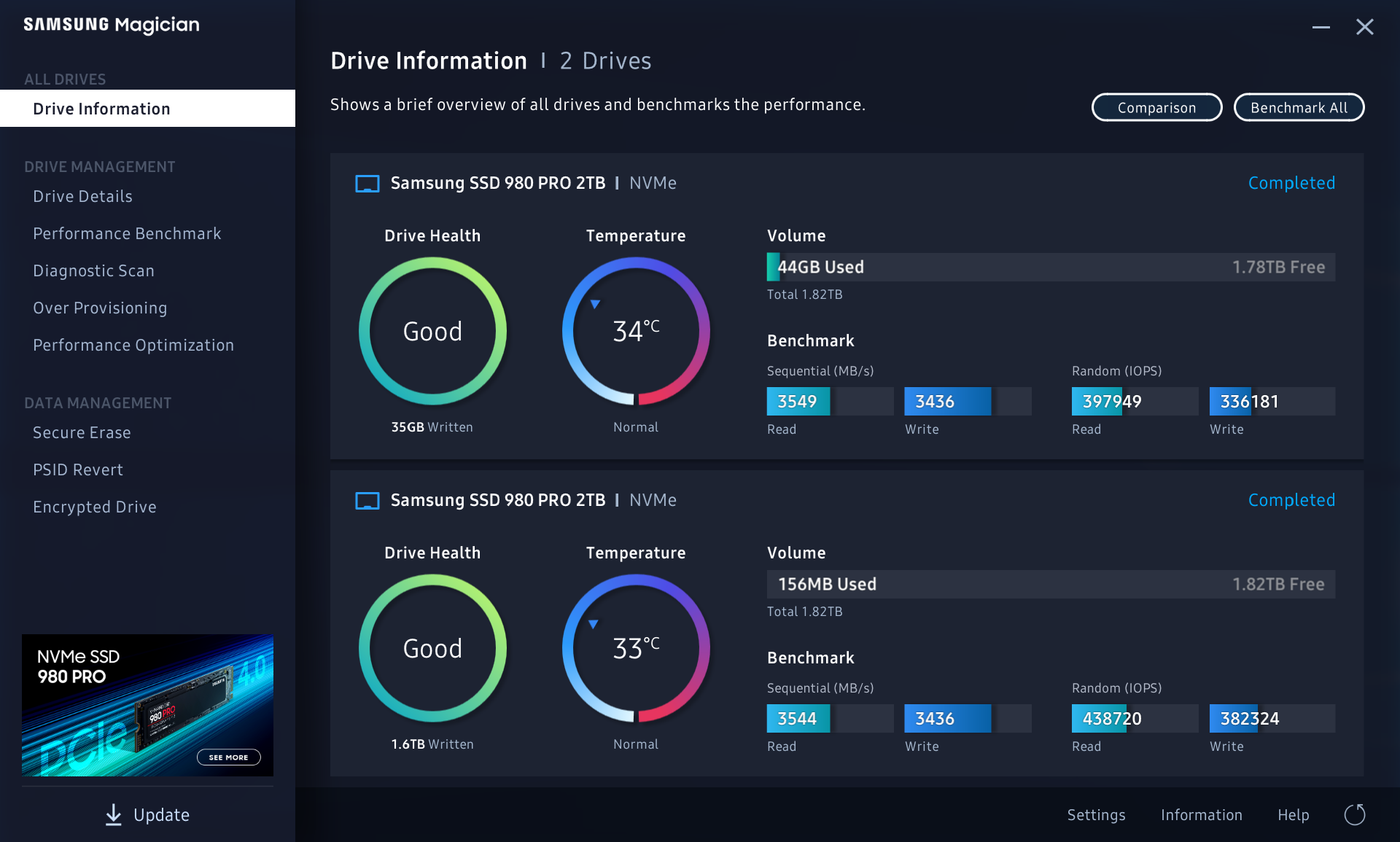
The SSD in my Windows 10 system started reporting failures, and as luck would have it, died while I was cloning it to a new drive. I suspect death was caused by overheating, and I addressed that with my new setup. This Windows 10 system is in an NCase M1 v5 SFF case with an ASUS ROG STRIX Z390-I GAMING mini-ITX motherboard and a Samsung 970 EVO NVMe M.2 SSD drive. The motherboard has two M.2 slots, one on the front of the motherboard and one on the back. The slot on the front has a heatsink, but I noticed the drive runs hot even under no load. Some googling showed this to be a common problem with the heatsink and M.2 slot being heated by the motherboard chipset, so I moved the SSD to the slot on the back of the motherboard. The SSD still reported +60°C temperatures under load, and I added a passive heatsink, and that kept temperatures in the low 50°C’s even under load. ...
March 15, 2021 · 5 min
2020-06-21 (1)

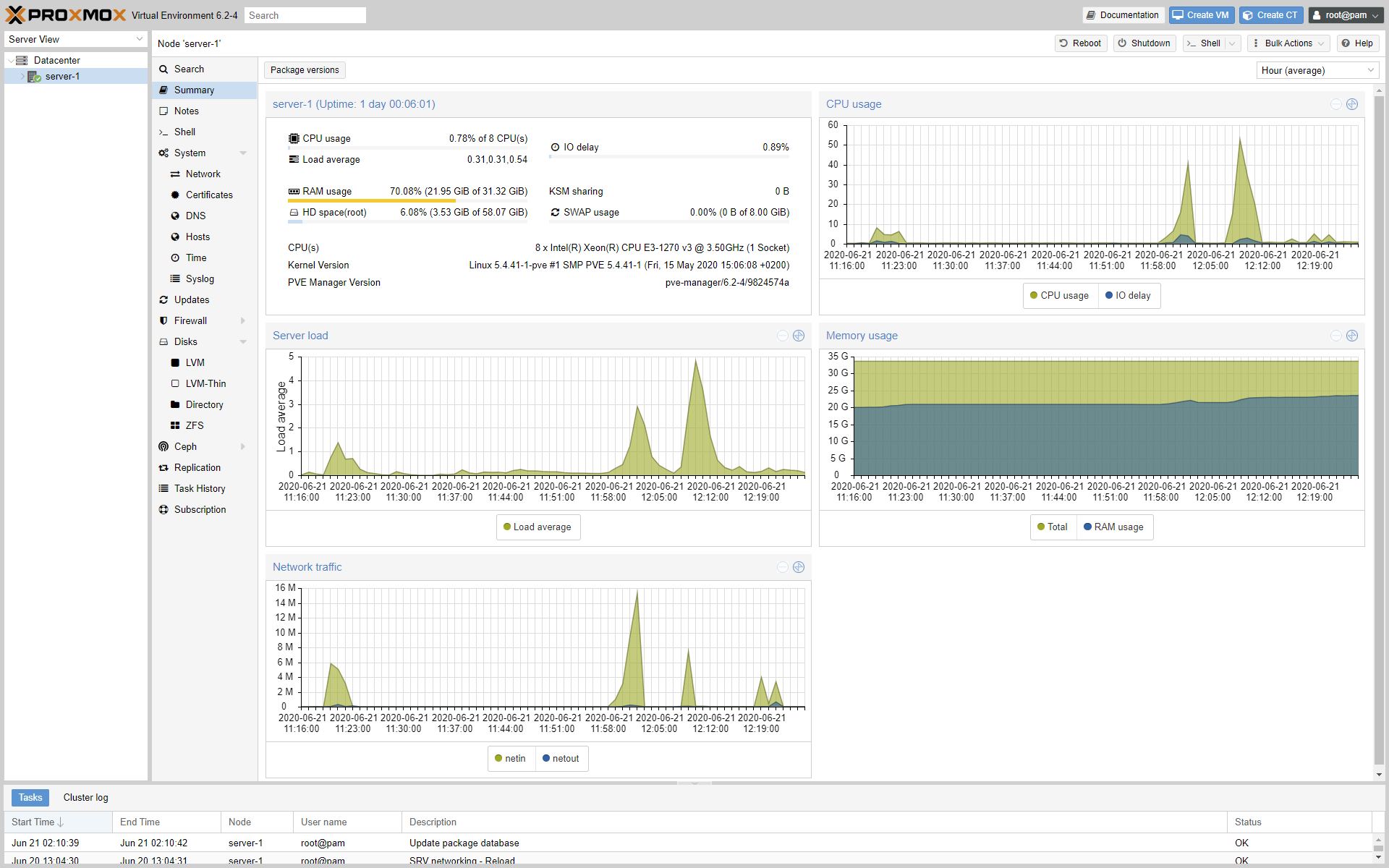
Moving from Unraid to Proxmox VE

I finally took the plunge and moved from Unraid to Proxmox VE. I used to love Unraid, but at some point the easy to use web management UI and app store ecosystem simply lacked capabilities I needed for deployment automation and configuration tasks. Then there is the problem with the poor IO performance, that I’ve written several posts on, and excessive SSD writes wearing out drives, that have remained unresolved, and no solution seems to be forthcoming. ...

June 21, 2020 · 21 min
IMG_5934

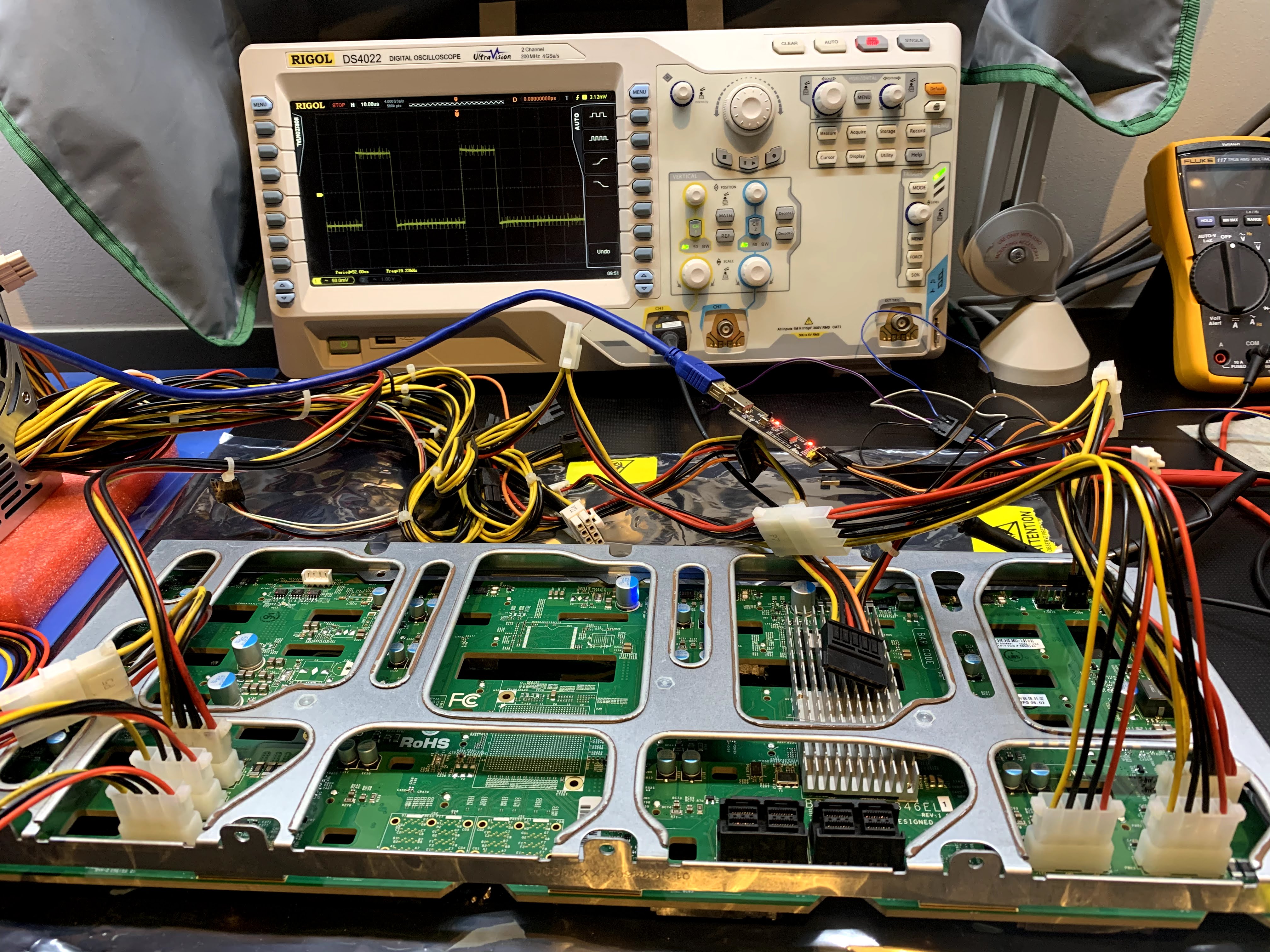
Recovering the Firmware on a Supermicro BPN-SAS3-846EL1 Backplane

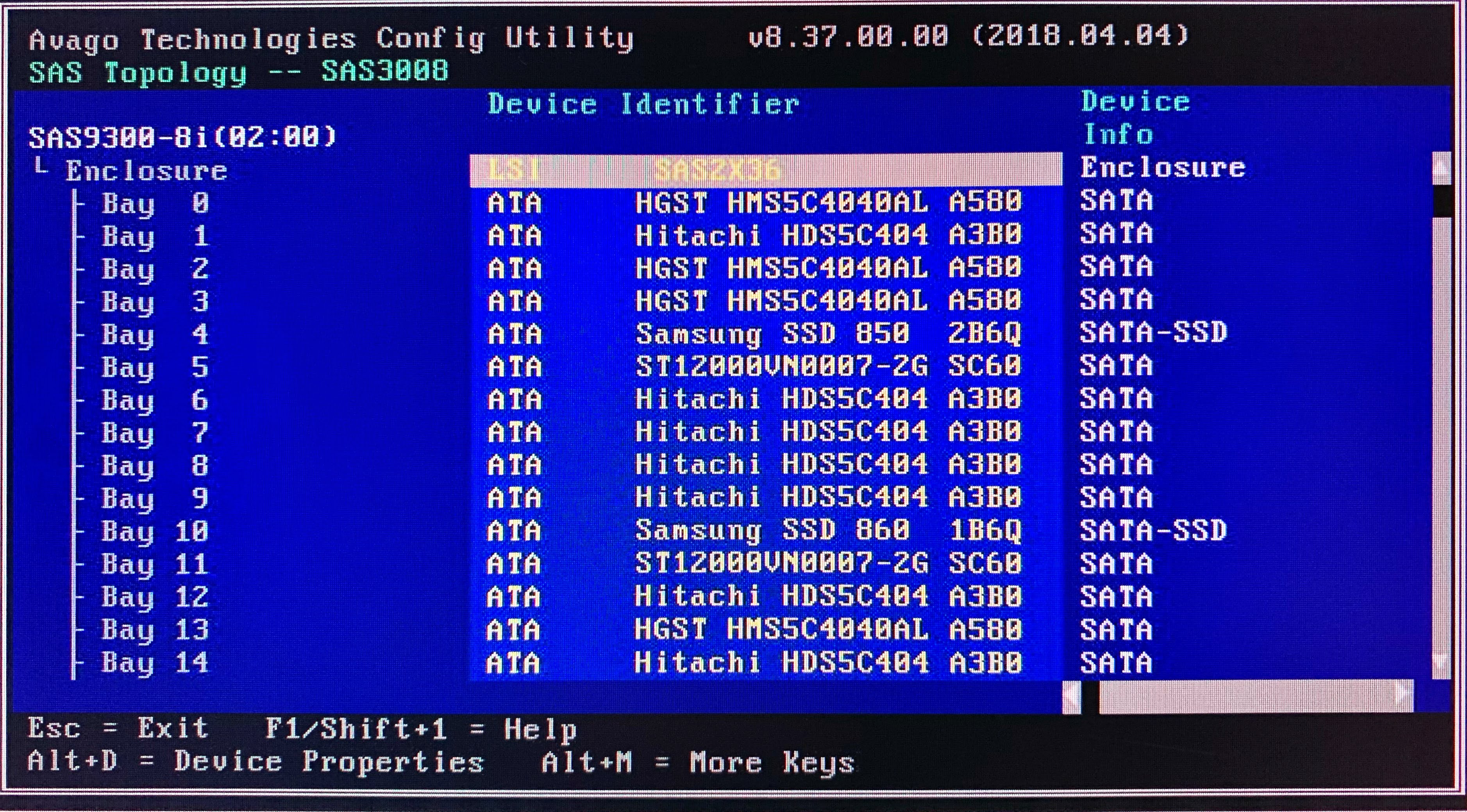
In a previous adventure I replaced an Adaptec HBA with an LSI SAS3 HBA, and the chassis drive bay LED’s stopped working. I suspect the LSI card does not play nice with the SGPIO sideband controller, and I decided to replace the chassis with one similar to my SC846 chassis, where the LSI card and drive bay LED’s do work fine. What should have been a simple replacement turned into quite a recovery operation. ...

February 2, 2020 · 11 min
Sum_Of_MBPS_and_BlockSize

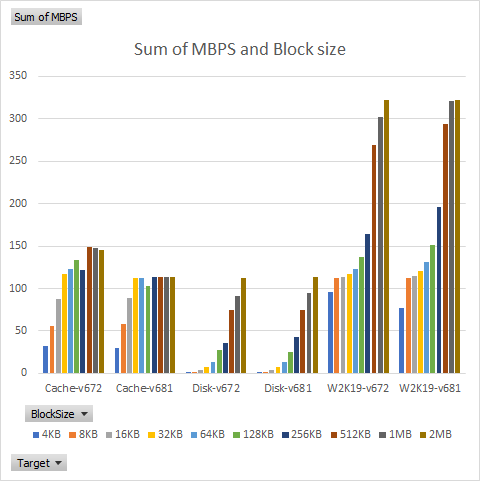
Unraid SMB Performance: v6.7.2 vs. v6.8.1

I previously wrote about the poor SMB performance I experienced in Unraid v6.7.2. Unraid v6.8 supposedly addressed SMB performance issues for concurrent read and write operations, and after waiting for the first bugfix release of v6.8, I re-tested using v6.8.1. In my last test I used a combination of batch files and copy and paste, this time I wrote a tool to make repeat testing easy. I am not going to describe the usage here, see the instructions at the GitHub repository. There are new reports in v6.8 of poor SMB performance when a folder contains large numbers of files, so I added a test to try and simulate that behavior, by creating a large number of files, then reading each file, then deleting each file. ...

January 16, 2020 · 2 min
IMG_5864

Unraid repeat parity errors on reboot

This post started with a quick experiment, but after hardware incompatibilities forced me to swap SSD drives, and subsequently lose a data volume, it turned into a much bigger effort. My two Unraid servers have been running nonstop without any issues for many months, last I looked the uptime on v6.7.2 was around 240 days. We recently experienced an extended power failure, and I noticed 5 parity errors, on both servers, after the servers were restarted. ...

January 11, 2020 · 11 min

Unraid and Robocopy Problems

In my last post I described how I converted one of my W2K16 servers to Unraid, and how I am preparing for conversion of the second server. As I’ve been copying all my data from W2K16 to Unraid, I discovered some interesting discrepancies between W2K16 SMB and Unraid SMB. I use robocopy to mirror files from one server to the other, and once the first run completes, any subsequent runs should complete without needing to copy any files again (unless they were modified). ...

May 13, 2019 · 4 min
FireShot Capture 007 - unraid_Apps - unraid.home.insanegenius.net

Moving from W2K16 to Unraid

I have been happy with my server rack running my UniFi network equipment and two Windows Server 2016 (W2K16) instances. I use the servers for archiving my media collection and running Hyper-V for all sorts of home projects and work related experiments. But, time moves on, one can never have enough storage, and technology changes. So I set about a path that led to me replacing my W2K16 servers with Unraid. I currently use Adaptec 7805Q and 81605ZQ RAID cards, with a mixture of SSD for caching, SSD RAID1 for boot and VM images, and HDD RAID6 for the large media storage array. The setup has been solid, and although I’ve had both SSD and HDD failures, the hot spares kicked in, and I replaced the failed drives with new hot spares, no data lost. ...

May 6, 2019 · 10 min

CrashPlan throws in the towel ... for home users

Today CrashPlan, my current online backup provider, announced on Facebook of all places, that they threw in the towel, and will no longer provide service to home users. The backlash was heated, and I found the CEO’s video message on the blog post rather condescending. I’ve been a long time user of online backup providers, and many have thrown in the towel, especially when free file sync from Google and Microsoft offers ever expanding capabilities and more and more free storage. Eventually even the cheapest backup storage implementation becomes expensive, when compared to a cloud provider, and not profitable as a primary business. ...

August 23, 2017 · 2 min
After

Rack that server

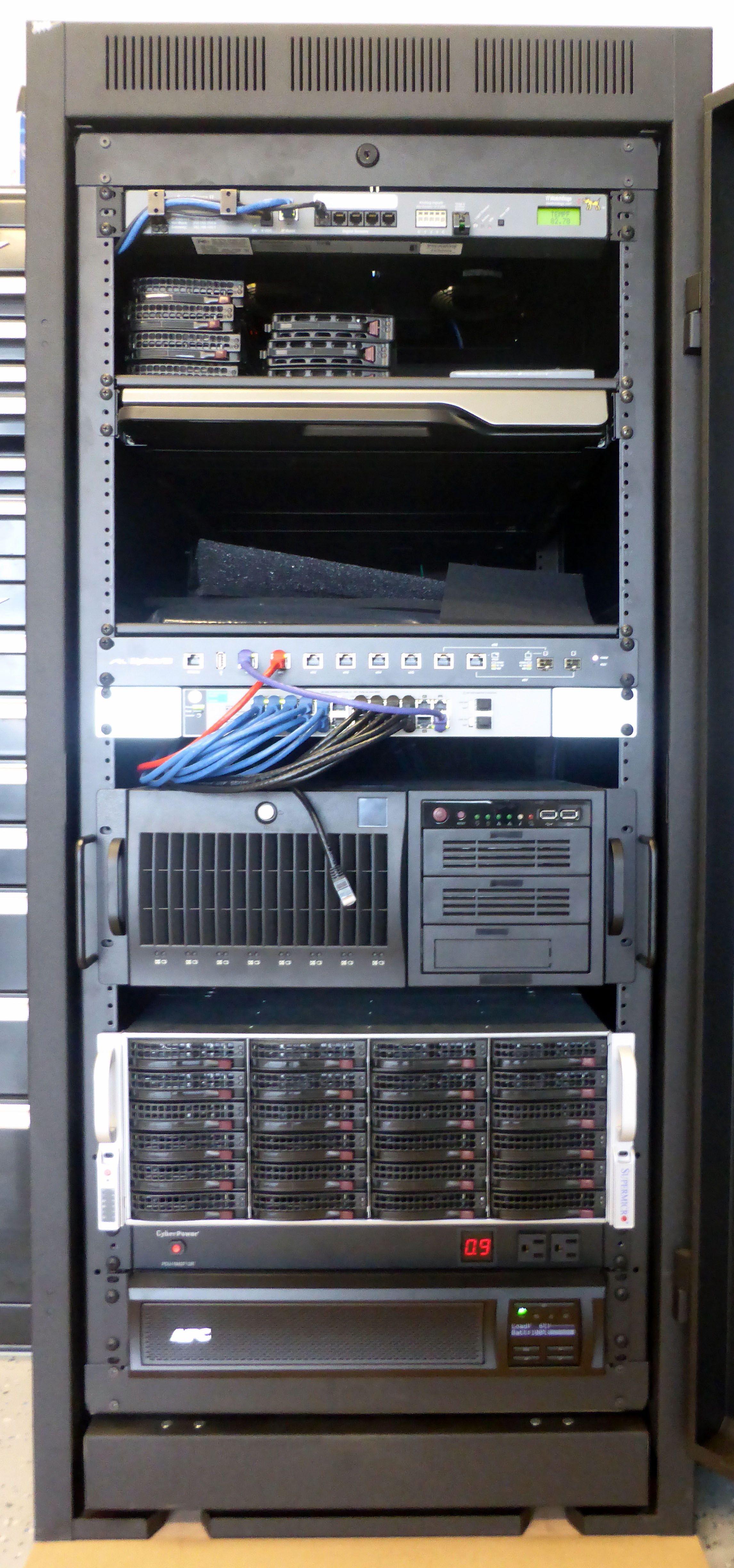
It’s been a year and a half since we moved into the new house, and I finally have the servers racked in the garage. Looks pretty nice compared to my old setups. My old setup was as follows: Two DELL OptiPlex 990 small form factor machines with Windows Server 2008 R2 as Hyper-V servers. One server ran the important 24/7 VM’s, the other was used for testing and test VM’s. The 24/7 VM’s included a W2K8R2 domain controller and a W2K12 file server. For storage I used a Synology DS2411+ NAS, with 12 x 3TB Hitachi Ultrastar drives, configured in RAID6, and served via iSCSI. The iSCSI drive was mounted in the Hyper-V host, and configured as a 30TB passthrough disk for the file server VM, that served files over SMB and NFS. These servers stood on a wooden storage rack in the garage, and at the new house they were temporarily housed under the desk in my office. ...

October 9, 2014 · 9 min

LSI turns their back on Green

I previously blogged here and here on my research into finding power saving RAID controllers. I have been using LSI MegaRAID SAS 9280-4i4e controllers in my Windows 7 workstations and LSI MegaRAID SAS 9280-8e controllers in my Windows Server 2008 R2 servers. These controllers work great, my workstations go to sleep and wake up, and in workstations and servers drives spin down when not in use. I am testing a new set of workstation and server systems running Windows 8 and Server 2012, and using the “2nd generation” PCIe 3.0 based LSI RAID controllers. I’m using LSI MegaRAID SAS 9271-8i with CacheVault and LSI MegaRAID SAS 9286CV-8eCC controllers. ...

November 21, 2012 · 3 min